Gondolin
Gondolin was a city of the High Elves of the West, a realm of the Noldor whose smiths forged weapons of surpassing power and beauty. In the ancient wars against the goblins, Gondolin was destroyed by dragons and goblin hordes, its ruins plundered and its treasures scattered. The memory of Gondolin lingers in The Hobbit as a source of legendary blades that reappear in the hands of the Company, linking the present quest to a deeper, older history of Middle-earth.
Weapons of Gondolin
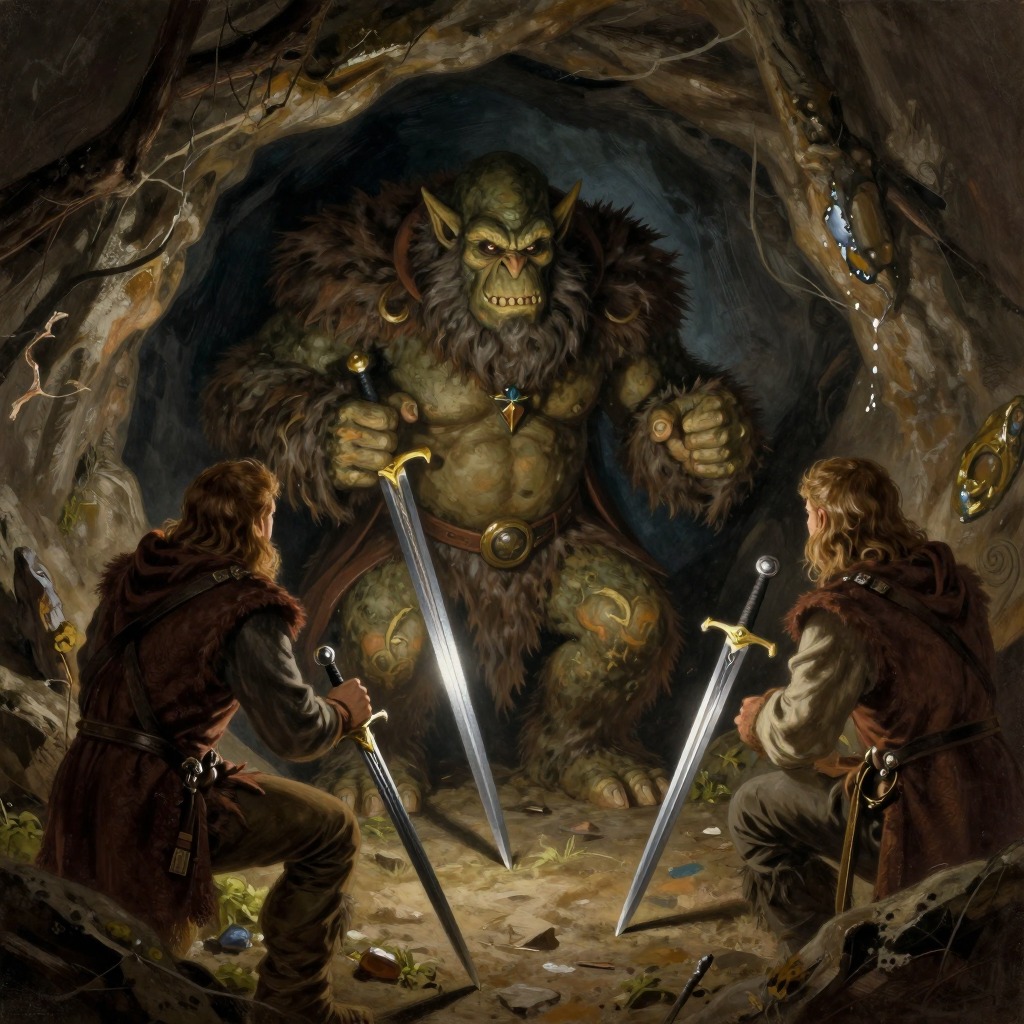
Two swords recovered from the trolls' lair are identified by Elrond as ancient blades of Gondolin, made for the Goblin-wars. The sword Orcrist, called Goblin-cleaver in the ancient tongue of Gondolin, is a famous blade; the sword Glamdring, Foe-hammer, was once worn by the king of Gondolin. Elrond explains that these swords must have come from a dragon's hoard or goblin plunder, for dragons and goblins destroyed that city many ages ago. The goblins themselves recognize the swords with terror, naming Orcrist "Biter" and Glamdring "Beater," and their hatred of these blades is immediate and visceral. The Great Goblin howls with rage at the sight of Orcrist, knowing it had killed hundreds of goblins when the fair elves of Gondolin hunted them in the hills or did battle before their walls.
Narrative Significance
Gondolin functions as a marker of lost grandeur and a source of potent artifacts that carry the authority of a vanished age. The swords serve as tangible links to a heroic past, their mere presence inspiring fear in goblins and respect in those who recognize them. For Bilbo, the dagger he takes from the trolls' hoard—later named Sting—is also an elvish blade made in Gondolin, and he takes comfort in wearing a weapon "made in Gondolin for the goblin-wars of which so many songs had sung." The city thus provides a historical depth that enriches the present adventure, connecting the Company's journey to the larger, ongoing struggle between the forces of light and darkness in Middle-earth.